Is Rental Car Insurance Worth It? A Coverage Map for Renting Abroad
A layer-by-layer map of rental car cover when you drive abroad: third-party liability, the collision damage waiver, the excess you still owe, excess reimbursement policies and credit card benefits, with a decision table for when buying extra cover makes sense.

Some links in this article lead to partner services. If you make a purchase there, the site may receive a commission; this does not affect the price or our assessment.
"Is rental car insurance worth it" is really four questions wearing one coat, because a rental car abroad is covered by up to five separate layers, each with its own gap. The counter agent's question ("would you like full protection?") only ever refers to one of them. This page maps the layers, shows where they overlap and where they leave you exposed, and ends with a decision table for the one purchase that is genuinely optional: excess cover.
The five layers
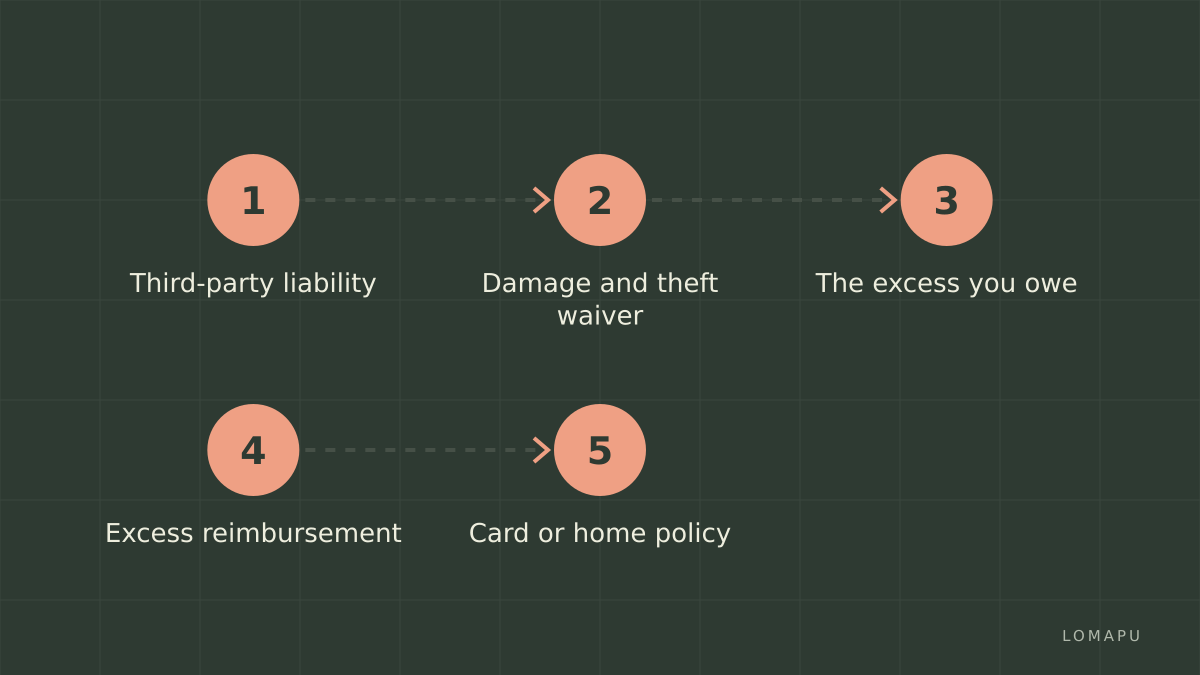
Layer 1: third-party liability. This pays for damage you cause to other people and their property. In the EU it is mandatory and, according to the Your Europe portal, must be included in the rental price and is valid across EU countries. Elsewhere the mandatory minimum varies widely, and in some countries (the United States is the usual example) the included limit can be low enough that supplementary liability is worth considering. Check the rental terms for the limit, not just its presence.
Layer 2: the collision damage waiver and theft protection. Usually abbreviated CDW or LDW, this is the rental company agreeing to waive most of its claim against you if the car is damaged or stolen. The Insurance Information Institute makes the point that matters: a damage waiver is not technically an insurance product; it is a contractual promise from the rental company, and it can be voided by behaviour such as speeding or driving under the influence. It is included in most quotes in Europe and often optional in North America.
Layer 3: the excess. The waiver in layer 2 almost always leaves you responsible for a first amount, called the excess or deductible, which can run to four figures in local currency and is the amount the company can charge to your card. The European Consumer Centres Network advises knowing exactly what the contract covers and "the excess that may be charged" before you sign, and notes that optional waivers reducing the excess must be itemised separately on your booking confirmation. This excess is what the counter is selling protection against.
Layer 4: excess reimbursement policies. Sold by brokers and standalone insurers rather than the rental desk, these refund the excess you pay after an incident. DiscoverCars Full Coverage is a typical example: an optional policy that reimburses the deductible plus eligible costs the rental company charges, up to a stated limit of EUR 5,000 at the time of checking. You pay the supplier first, then claim within 90 days with the documentation.
Layer 5: coverage you already own. A personal auto policy may extend collision and comprehensive cover to rental cars for personal use in your home country, though not always abroad. Some credit cards include rental damage benefits, but the Insurance Information Institute notes these are usually secondary, paying only after other cover is exhausted, and that terms vary by card and issuer, so the only reliable check is to call the issuer before you travel.
Where the layers overlap and where they do not
Risk | Third-party liability | CDW / theft waiver | Excess reimbursement (e.g. Full Coverage) | Credit card benefit |
|---|---|---|---|---|
Damage to other cars or people | Yes, up to the limit | No | No; explicitly excluded | No |
Bodywork damage to the rental | No | Yes, above the excess | Refunds the excess | Often, secondary |
Tyres, wheels, glass, mirrors, undercarriage, roof | No | Frequently excluded from the waiver | Listed as covered | Varies, often excluded |
Theft of the car | No | Theft protection, above excess | Refunds the theft excess | Often, secondary |
Towing, admin fees, lost keys, misfuelling | No | Usually not | Listed as covered | Rarely |
Interior damage and cleaning | No | No | Excluded unless from a collision | Rarely |
Traffic fines and related admin | No | No | Excluded | No |
Personal injury to you | No | No | No | No; needs travel insurance |
The table reveals the two classic gaps. First, the waiver at the counter commonly excludes exactly the parts a holiday car damages most: tyres on rough roads, windscreens from gravel, the undercarriage on a steep drive. An excess policy that lists those parts closes that gap. Second, nothing in the rental stack covers your own injuries; that is travel insurance, and it should be arranged separately.
A third point is often missed: excess reimbursement does not remove the security deposit. DiscoverCars states plainly that Full Coverage does not reduce the supplier's deposit requirement, so the rental company will still block a sum on your credit card at pickup. Budget for that hold whichever cover you choose.
Counter cover versus broker cover
There are two ways to protect the excess, and they work differently.
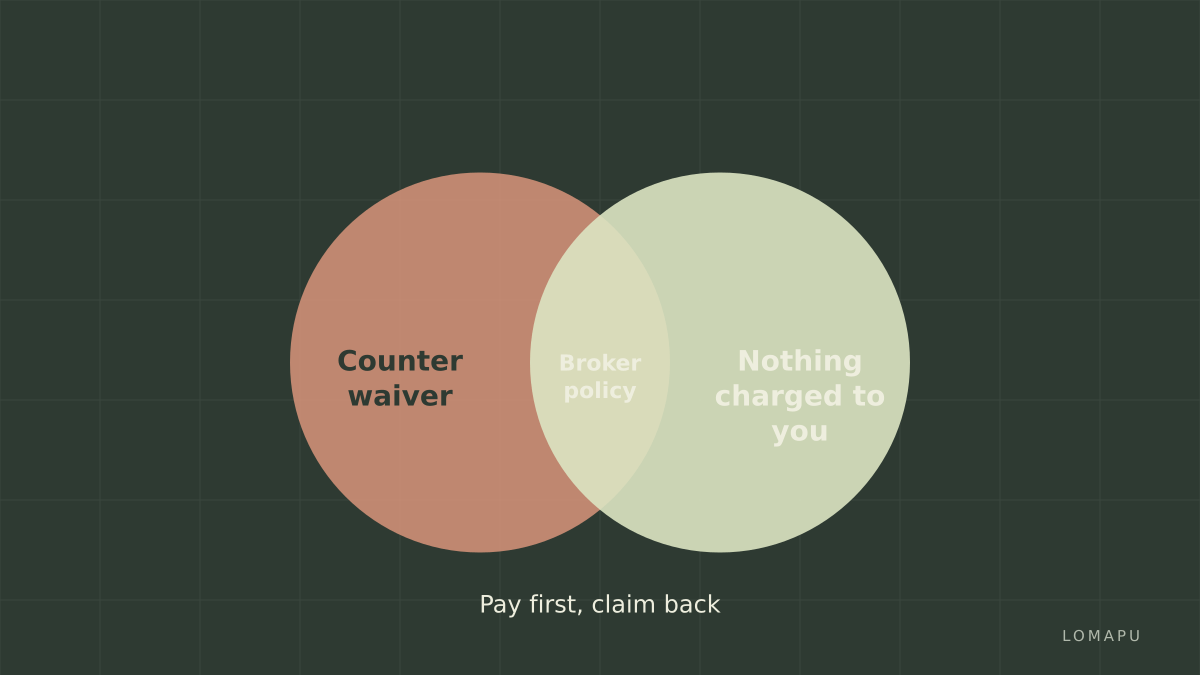
Super CDW at the counter. The rental company reduces the excess to zero or near zero in exchange for a daily fee. Its advantage is that nothing is charged to you in the first place; you walk away after an incident. Its disadvantages are price, which is typically the highest per day of any option, and the fact that it still tends to exclude glass, tyres and undercarriage unless a second add-on is bought.
Excess reimbursement via the broker or a standalone insurer. Cheaper per day and broader in what it lists, but it is a refund model: the rental company charges your card, and you claim the money back with the damage report, invoices and rental agreement. DiscoverCars Full Coverage follows this pattern, including the 90-day claim window and the EUR 5,000 cap, and is bought at the time of booking through the comparison site rather than at the desk.
Honest limitations of the broker route: you must have the card capacity to absorb the charge for weeks; you must collect paperwork at a stressful moment; the policy is a separate contract from the rental, so the desk may still push its own product; and the cap means a total loss of an expensive vehicle could exceed it. An annual excess policy from a specialist insurer is the alternative for people who rent several times a year, and it covers the same gap without being tied to one booking platform.
Decision table: should you buy excess cover
Your situation | Buy excess cover? | Which kind |
|---|---|---|
Card benefit confirmed in writing to cover this country and car class, and you can fund the deposit | Probably not | Rely on the card, keep the confirmation with you |
Card benefit unconfirmed or secondary only | Yes | Broker or standalone excess policy |
Renting on islands, mountain roads or gravel | Yes | A policy that lists tyres, glass and undercarriage |
Short city rental on good roads, low excess quoted | Optional | Compare the excess against the policy price |
Cannot absorb a four-figure card charge for several weeks | Yes, at the counter | Super CDW, despite the cost |
Renting three or more times a year | Yes | Annual standalone excess policy |
Driving across borders | Check first | Inform the rental company at booking; the EU portal notes documentation and cover must be valid in every country you enter |
The pickup and return routine
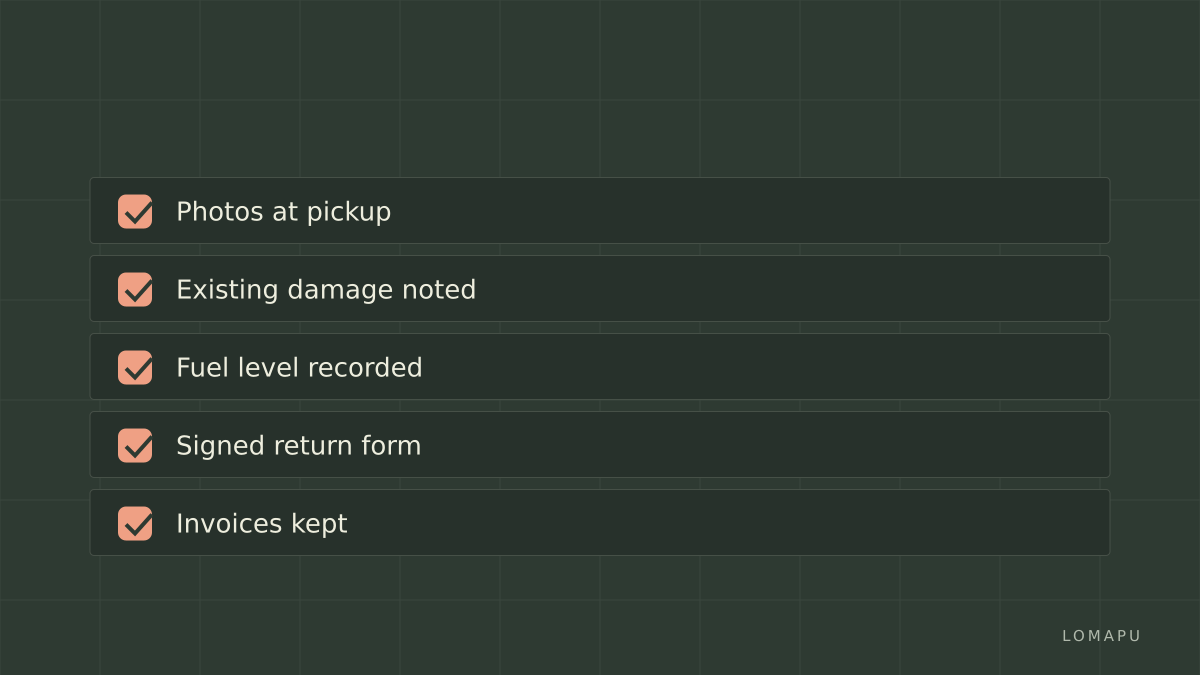
Whatever cover you hold, the claim depends on evidence. The European Consumer Centres recommend a joint inspection with a checklist at pickup, photographing and noting every existing mark if no staff member is available, and a joint inspection at return with a signed acceptance form confirming the condition. Keep that form. If a damage charge appears later, request the repair invoice in writing; unresolved disputes in Europe can go to your national consumer centre, the European Car Rental Conciliation Service or the small claims procedure.
Conclusion
Rental car insurance is worth it in one specific sense: the excess left behind by the counter waiver is a real, four-figure risk, and it is cheap to remove. Whether you remove it with a card benefit you have confirmed, a counter product that spares you the charge, or a reimbursement policy such as DiscoverCars Full Coverage depends on your card capacity, your roads and how often you rent. Liability limits and your own injuries sit outside all of these and need separate attention. Map the five layers before you reach the desk, and the question at the counter becomes an easy one to answer.
Sources
- https://www.iii.org/article/rental-car-insurance
- https://europa.eu/youreurope/citizens/travel/driving-abroad/car-rental-abroad/index_en.htm
- https://www.eccnet.eu/consumer-rights/what-are-my-consumer-rights/travel-and-passenger-rights/road-travel-rights/car
- https://www.discovercars.com/help/articles/protection-coverage/discovercars-full-coverage/what-is-full-coverage
- https://www.discovercars.com/help/articles/protection-coverage/discovercars-full-coverage/what-is-covered-by-full-coverage