Skillshare vs MasterClass: Which Creative Learning Platform Fits Which Learner
A side-by-side of project-based Skillshare and lecture-based MasterClass by learning style, class format, community features and plan structure, with a decision table for hobbyists, freelancers and career changers.

Some links in this article lead to partner services. If you make a purchase there, the site may receive a commission; this does not affect the price or our assessment.
Skillshare and MasterClass both sell a subscription to creative classes, and both list drawing, writing, photography and design. The resemblance ends there. Skillshare is built around doing a project and showing it to other students; MasterClass is built around watching a famous practitioner talk through their craft. Which one is "better" depends almost entirely on how you learn. This comparison maps the two formats, then gives a decision table by learner type.
The core difference: project-based vs lecture-based
Skillshare describes each class as a set of short lessons plus a hands-on project. You watch a lesson, do the step, upload your project to the class gallery, and can get feedback from the teacher or other students. Teachers are working creators, freelancers and professionals rather than celebrities, and the catalogue runs to thousands of classes across illustration, design, photography, writing, marketing, productivity and more.
MasterClass produces a smaller catalogue (at the time of checking, its help pages describe 200 plus classes across 13 categories) taught by well-known names in their fields. Each class is a filmed series of lessons with high production values, often with supporting materials. There is no assignment to submit and no peer gallery; the "project" is whatever you choose to do afterward.
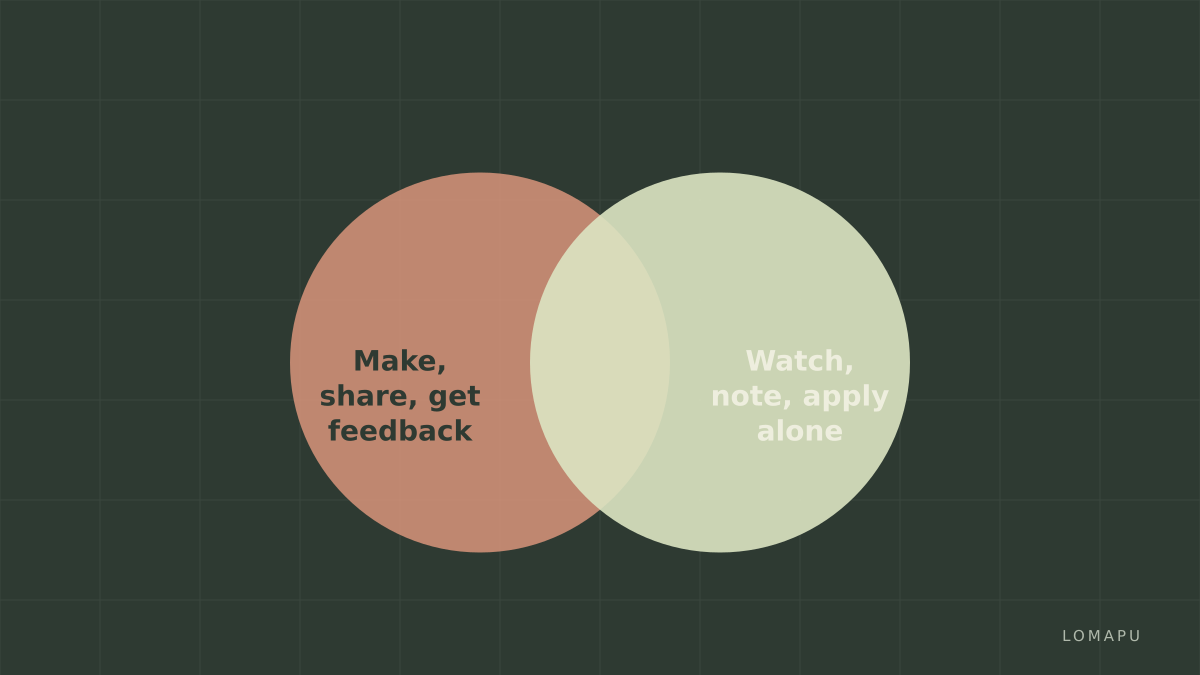
The distinction matters more than star power. Project-based classes force output: you finish with an artefact and, usually, a habit. Lecture-based classes give you a mental model from someone at the top of the field, which can be inspiring and occasionally transformative, but the transfer to your own work is your job.
Class format compared
Feature | Skillshare | MasterClass |
|---|---|---|
Typical class length | Short lessons adding up to a compact class | Multi-lesson filmed series per instructor |
Who teaches | Practising creators and professionals | Prominent figures in their field |
Built-in project | Yes, every class includes one | No formal assignment; workbook for self-study |
Feedback | Project gallery with teacher and student comments | None built in |
Community | Class discussions, project sharing, Learning Paths | Minimal by design |
Certificates | Certificates and badges for completed classes and paths | Not a focus |
Offline viewing | In the mobile app on paid plans | On Plus and Premium plans |
Catalogue size | Thousands of classes | 200 plus classes |
Free access | Free trial with payment details; no free class tier since 2021 | No free tier; 30-day satisfaction guarantee |
How the plans are structured
Both platforms are subscriptions, but they meter different things.
Skillshare sells one membership that unlocks the entire catalogue while active. At the time of checking, its help centre describes a seven-day free trial (occasionally 30 days in promotions), payment details taken upfront, automatic conversion to a paid plan unless cancelled, and cancellation at any time. Billing options and prices vary by region. Included features are the full library, projects, certificates, Learning Paths, personalised recommendations and offline downloads in the app.
MasterClass sells three tiers, Standard, Plus and Premium, billed annually. The tiers differ by number of devices (one, two and six respectively), offline mode (Plus and Premium) and additional profiles on the higher plans; the class library is the same across all three. All plans carry a 30-day satisfaction guarantee. Prices are shown per month but charged for the year, and promotional discounts are frequent, so confirm the current figure on the plans page.
The practical reading: Skillshare's plan question is "am I going to keep making things this year"; MasterClass's plan question is "how many people in my household will watch". If you want to try before committing, start the Skillshare trial and set a cancellation reminder for day six; MasterClass gives you 30 days after payment instead of a trial.
Decision table by learner type
You are | Recommendation | Reason |
|---|---|---|
A hobbyist who wants to draw, paint or letter regularly | Skillshare | Short classes with a project fit a weekly habit; feedback keeps you going |
A freelancer adding a sellable skill (motion graphics, branding, product photography) | Skillshare | Practitioner teachers, tool-specific classes, portfolio pieces from projects |
A writer or filmmaker seeking perspective from masters of the craft | MasterClass | The value is the mentor's thinking, not exercises |
Someone who learns by watching and rarely does homework | MasterClass | Lecture format matches the habit; be honest that skills may not follow |
A team lead building creative literacy across a team | Skillshare | Team plans, Learning Paths and certificates suit structured rollout |
A gift for a curious relative | MasterClass | Broad, polished, no assignments; the multi-profile plans suit households |
Someone on a tight budget who needs one specific tutorial | Neither | Buy a single course elsewhere or use free material |
Where each platform falls short
Skillshare's weaknesses follow from its openness. Quality varies between teachers, so you rely on ratings, student counts and recent activity to pick classes. Feedback in the gallery is only as good as who happens to comment; popular classes get lively discussions, smaller ones can be quiet. The trial requires payment details and converts automatically, which is standard but catches people who forget. And the platform dropped its free class tier in 2021, so there is no way to sample without a trial.
MasterClass's weaknesses follow from its model. The catalogue is small, so if your niche is not covered, there is nothing to watch. The absence of assignments and feedback means the platform cannot tell you whether you improved. The plan tiers meter devices rather than content, which annoys single users who only want offline access. And the aspirational framing can leave beginners with inspiration and no next step.
An alternative worth knowing for tool-specific creative skills is Domestika; for university-style creative theory, edX and Coursera carry film, writing and design courses from institutions.
A four-step way to choose
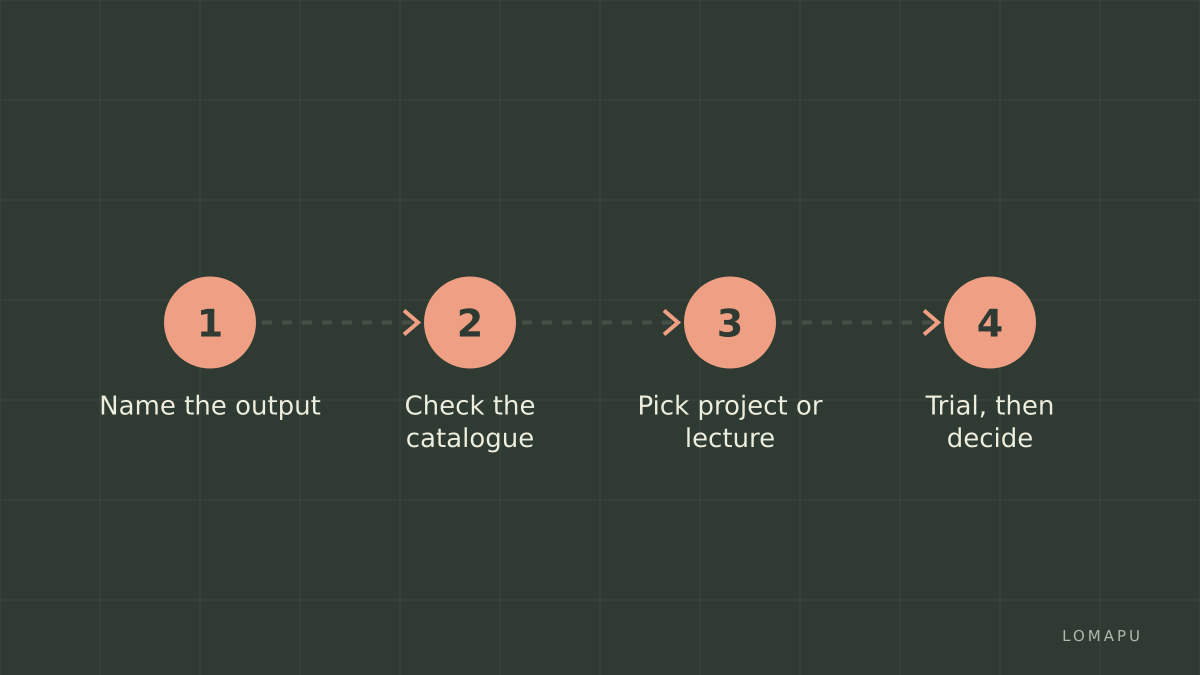
Name the output you want in 90 days. A finished illustration series, a redesigned portfolio, a first short story draft, or simply a better understanding of how directors think.
Check that the catalogue covers it. Search both sites for the specific tool or genre; MasterClass in particular may not have your niche.
Match format to output. Artefacts and habits point to project-based; perspective and inspiration point to lecture-based.
Use the trial or guarantee deliberately. Finish one full class in the window, including the project if there is one, and decide on evidence rather than on the landing page.
Conclusion
Skillshare and MasterClass answer different questions. If you want to make things, get feedback and build a portfolio with working professionals as teachers, a Skillshare membership is the better fit, accepting that class quality varies and the trial converts automatically. If you want to hear how leading practitioners think and you are disciplined enough to translate lectures into your own practice, MasterClass is the richer experience, within its smaller catalogue. Pick by the output you want in three months, not by whose name is on the poster.
Sources
- https://help.skillshare.com/hc/en-us/articles/205208147-How-does-Skillshare-work
- https://help.skillshare.com/hc/en-us/articles/4402806767117-How-do-Skillshare-subscriptions-pricing-and-refunds-work
- https://help.skillshare.com/hc/en-us/articles/205221237-What-does-a-Skillshare-membership-include
- https://www.masterclass.com/help-center/masterclass/answers/about-master-class-membership-plans--id--PGoz0INLRbaed9cRWP0JVw
- https://www.masterclass.com/plans