Dochub login – 3 checks before you sign in (free tier)
Direct guidance for signing into DocHub: where to sign in, three checks to avoid account and workflow problems, a comparison table, scenarios and a clear step plan. Includes the login URL.

Some links in this article lead to partner services. If you make a purchase there, the site may receive a commission; this does not affect the price or our assessment.
Sign in at the official DocHub login page https://www.dochub.com/login using email or an SSO provider and you will reach your editor and signature tools immediately. The login page URL and the visible sign-in methods are the single most concrete check you need before entering credentials; keep that tab open and confirm the domain matches the one above. Below you get a short decision checklist, a compact comparison table, three real scenarios, and a step plan for safe, repeatable access.
In short – Key takeaways
DocHub web login – use DocHub web login at the official URL; confirm the domain and the active HTTPS certificate before typing credentials.
Pick the right sign-in method – email/password gives independent account control; Google SSO is faster but ties account access to that Google identity.
Protect shared workflows – enable a browser password manager or a team credential plan if you share work; DocHub sessions can persist across devices unless you sign out.
Watch for limits when collaborating – DocHub workflows and advanced features are gated by feature tiers listed on the pricing page, so check DocHub web login then Pricing for plan features.
Which sign-in method should I choose for daily document work?
If you use a single personal device, Google SSO is fastest: authentication happens in one step and you avoid creating a separate password. If you need separation between work and personal access, use an email/password account created via the DocHub login page. For teams, prefer an account tied to a company email managed by your IT group so access can be revoked centrally. The DocHub web login page lists available providers; confirm which SSO providers appear before you commit, and record which account you used in your team documentation.
How to decide between free access and paying for features
Compare what you need: quick annotation and signing for a few documents fits the free-tier workflow; recurring e-sign workflows, PDF form merging, or priority support push you to a paid plan. Use this simple rule: if you process more than one multi-page signed package per week, plan to check the pricing features on the DocHub site and upgrade. For shared pipelines, the drawback of the free option is limited automation and collaboration controls; a paid plan increases those limits and adds role control.
Quick comparison table – options for signing in and who they suit
Option | Who it suits | Key number | Main drawback |
|---|---|---|---|
DocHub web login (email/password) | Solo users who want account control | 2 steps to sign in | Requires managing a separate password |
DocHub SSO (Google) | Fast personal sign-ins, single-device users | 1 step SSO | Account tied to Google identity |
DocHub via workplace SSO | Teams with IT-managed accounts | 1–2 steps depending on IdP | Requires IT configuration, onboarding time |
External e-sign alternative | Enterprises needing advanced compliance | Typical 3-step enterprise flow | Higher cost and longer setup time |
One honest limitation of DocHub is that advanced team admin features are more limited than enterprise e-sign platforms; an alternative to consider for strict compliance or large-scale account provisioning is Adobe Acrobat Sign.
What concrete checks catch the common traps?
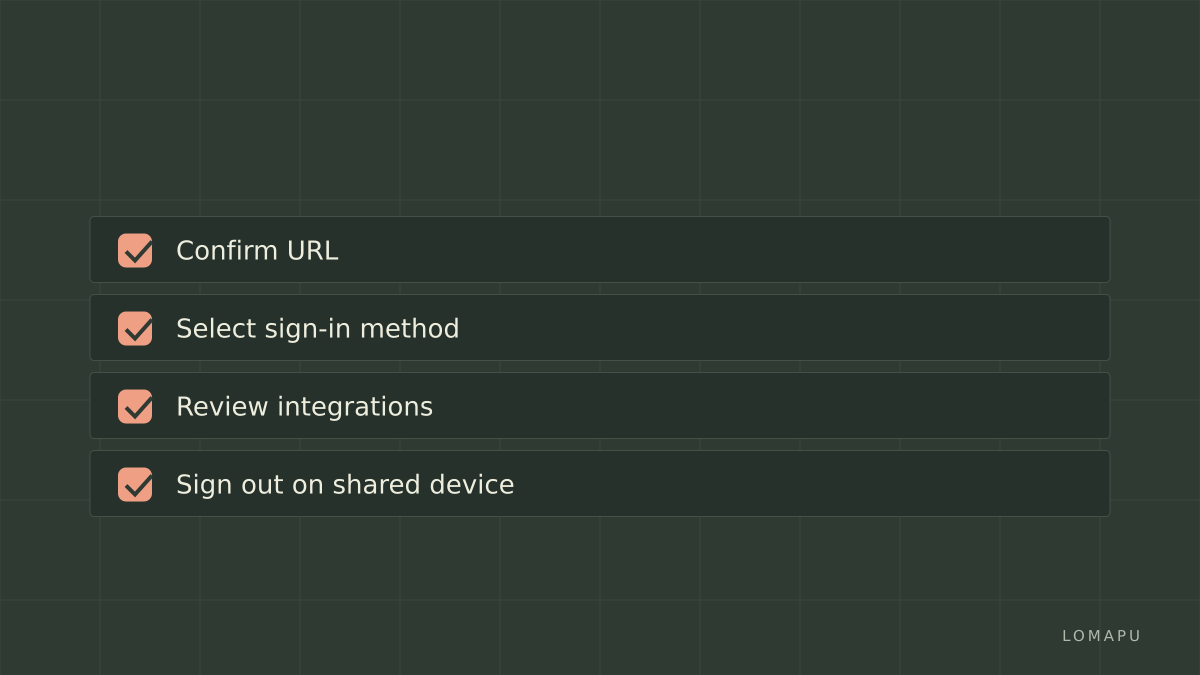
URL check: confirm the address bar shows https://www.dochub.com/login before entering credentials. This prevents phishing attempts.
Session scope: if you use a shared device, explicitly sign out and clear site data after use; leaving an active session can expose signed documents.
Integration notice: if you connect Google Drive, Dropbox or Gmail via the DocHub interface, review granted scopes in your provider's permissions screen and revoke unused connections. Each check is a single action you can complete in under two minutes.
Step plan – get signed in and keep workflows moving (5 steps)
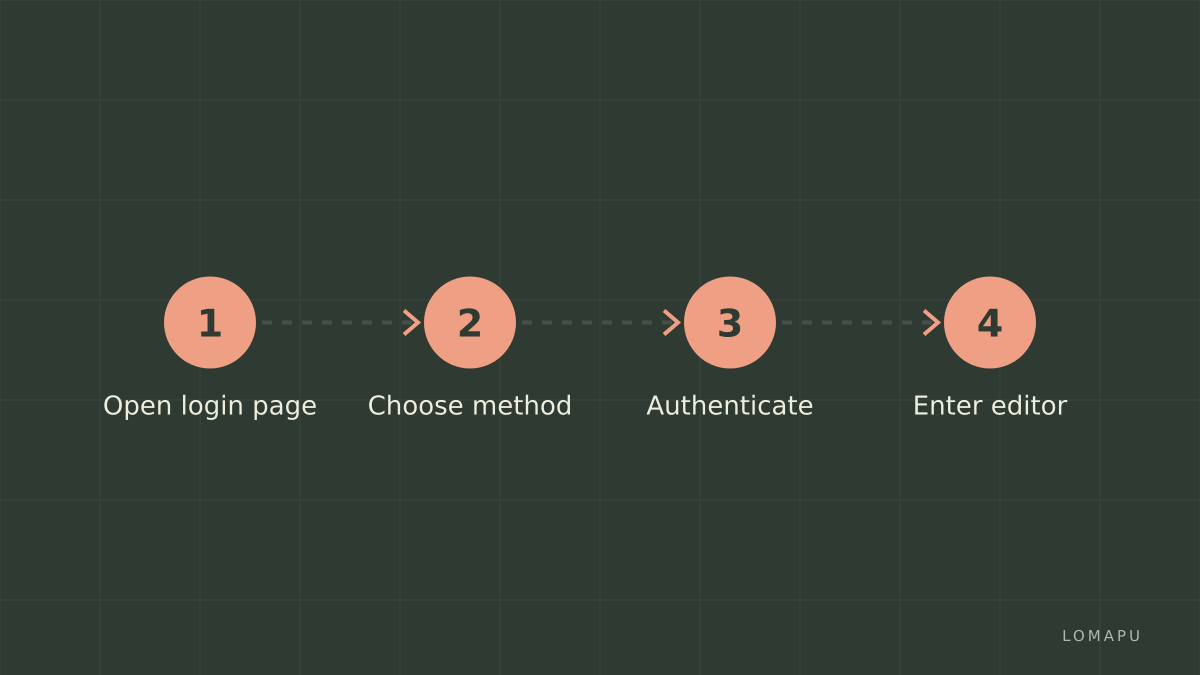
Open a private browser window and go to https://www.dochub.com/login to avoid cached SSO confusion.
Choose sign-in method: pick Google SSO for speed or email/password for separated identity; note which you choose in your team notes.
Complete authentication and enable two-factor on your primary email account if possible. DocHub itself relies on your identity provider for MFA.
Configure document defaults: set signature appearance and autosave preferences inside the editor so repeated work is consistent.
For recurring teams, export a list of active users and their sign-in methods to your admin log monthly.
Scenarios – which choice fits your task?
Solo freelancer sending occasional contracts: use email/password via the DocHub web login and keep a browser password manager. It keeps control independent from your corporate SSO and avoids accidentally mixing client accounts.
Small team with shared folders: prefer workplace SSO and a paid plan that offers shared templates; that reduces password juggling and centralizes access. Check the plan features on the DocHub pricing page when you log in.
High-volume legal or compliance work: evaluate an enterprise-grade e-sign product for audit trails; DocHub is lighter weight and may lack some enterprise provisioning controls.
FAQ
Q: Can I switch from Google SSO to an email/password account? A: Yes, you can add a password-based login after creating an account, but first confirm your sign-in methods on the DocHub web login page and add a recovery email. If you rely on Google SSO exclusively, create an email login before removing Google access to avoid losing account access.
Q: What should I do if I forget my DocHub password? A: Use the password reset link on the login page; it sends instructions to the account email. If your account uses SSO only, reset through your identity provider instead.
Q: Is DocHub secure for signing sensitive documents? A: DocHub uses HTTPS and common web security practices; for the highest compliance levels, confirm required audit and retention features against the product features page and consider an enterprise alternative if strict certification is needed.
Q: How long do sessions last on DocHub? A: Session duration depends on your browser and whether "remember me" was selected on sign-in; for shared devices always sign out and clear browser data after use to force reauthentication.
Decision rule: For day-to-day signing and light collaboration, sign in at DocHub web login using the method that matches your account control needs; choose Google SSO for speed, email/password for independent account management, and move to a paid plan only when your weekly workflows exceed the free-tier limits (see the DocHub pricing page for feature thresholds).
Sources:
https://www.dochub.com/login
https://www.dochub.com/pricing
https://www.dochub.com/features